Data indicated that more usage meant higher retention. Unfortunately, the majority of HubSpot's core seat users were light or infrequent users of the product.


Unsurprisingly, NPS and CSAT scores were eroding simultaneously.
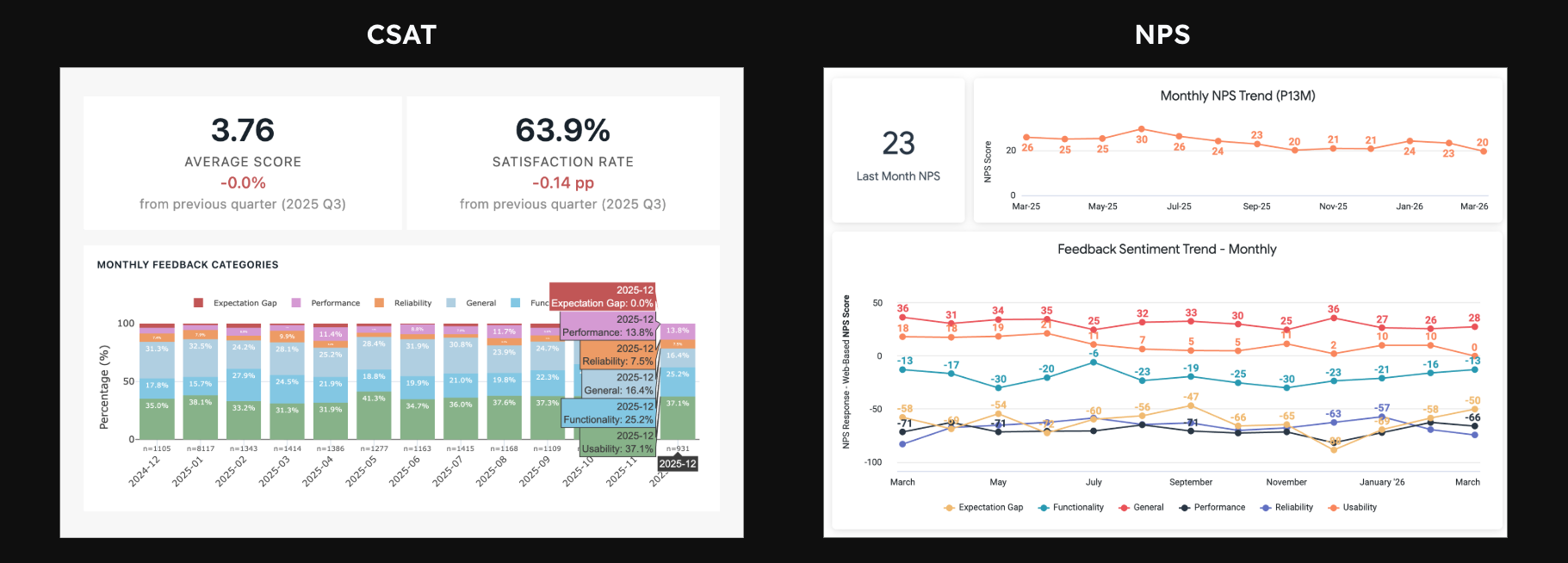
Customers were unhappy and vocal about it:
“It’s like living in a home with a 1,000 doors and one of them goes to the kitchen, but I can't figure out which one it is.” NPS 1
“Too limited for the cost. Too difficult to use. I'd rather migrate. There are much simpler to use CRMs out there much cheaper” NPS 5
“The product is just a mess of design...it's clearly showing it's age and takes so much work to keep things running correctly.” NPS 5
“The UI is waaayyyy too kludgey. Everything is hidden. UI grade: C-” NPS 6
The moment we were in called for a dramatic transformation of the product.
As a team, we outlined the goals of the work:

Straightforward mental model. Customers build a mental model once and carry it across the entire journey.
Every login starts with clarity. Global Home and Navigation immediately show what matters and where to go.
AI is in the flow of work. Breeze Assistant is discoverable, context-aware, and trusted across core surfaces.
Breeze makes every action meaningful. Information and insights are put in context in a consistent, trustworthy way.
The interface gets out of the way. UI is visually calm, fast and structured around user intent. Users always know what to do, why it matters, and what they’ll get.
UI updates happen in near real-time. No refreshes required - users understand when relevant data has changed without jarring updates.
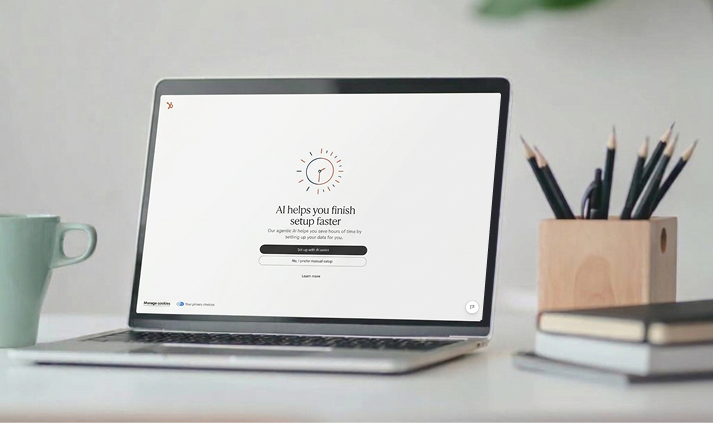
I played a hands-on role in shaping the modernized setup and onboarding experience, contributing across several of the workstream’s most important user-facing surfaces. My main goal was to define how agentic journeys would appear in the product for the setup and activation experience.
My first step was to hone in on the specific personas we were designing for. These were defined through thorough conversations with our team of UX researchers and the teams that owned onboarding.

Once we had the user profiles outlined, I was able to better understand how to tailor the experience. Using the design system’s modernized components, I reimagined the existing flow around one question:
How might we use AI to guide users through setup, so they never end up lost or confused on an empty page?

I mapped the full admin journey to find every point where users could get stuck, then designed Breeze to step in at each one: capturing goals, suggesting setup, recovering skipped steps, and guiding users long after day one.
Tester


